
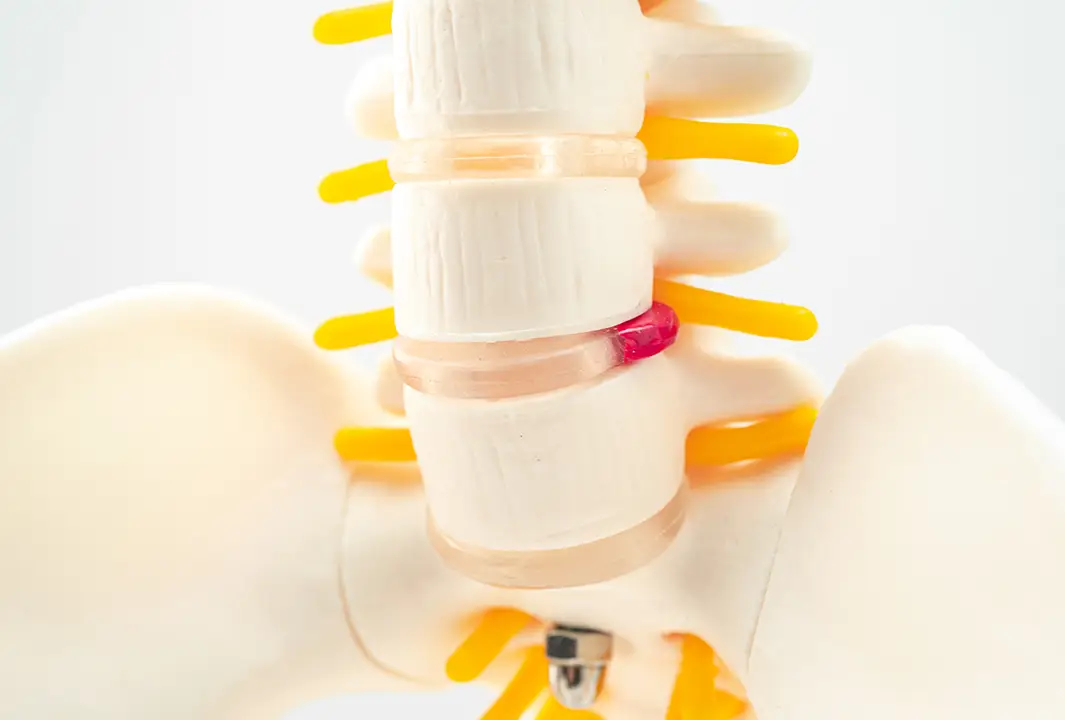
Targeted Treatment for Disc-Related Back Pain and Nerve Compression
A posterior disc bulge is a common spinal condition in which the soft, inner portion of a spinal disc protrudes backward into the spinal canal, potentially pressing on nearby nerves. This can lead to chronic back pain, leg numbness, or sciatica, especially when the bulge occurs in the lumbar spine.
At Starcare International Hospital, we provide comprehensive, evidence-based care for posterior disc bulges, using both non-surgical therapies and advanced surgical interventions. Our goal is to relieve pain, improve function, and prevent long-term complications—through personalized spine care tailored to your specific needs.
What Is a Posterior Disc Bulge?
Each disc in your spine acts as a cushion between vertebrae, helping to absorb shock and support movement. A posterior disc bulge occurs when the disc pushes backward (posteriorly) into the spinal canal. Unlike a full disc herniation, the disc material in a bulge may not break through the outer layer—but it can still compress nerves and cause symptoms.
Posterior disc bulges are most commonly seen in the lower back (lumbar spine) and neck (cervical spine).
Common Causes
-
Age-related disc degeneration
-
Poor posture or prolonged sitting
-
Heavy lifting or sudden movements
-
Repetitive strain or overuse
-
Traumatic injury
-
Sedentary lifestyle or weak core muscles
Symptoms of Posterior Disc Bulge
-
Localized back or neck pain
-
Radiating pain down the leg (sciatica) or arm
-
Numbness, tingling, or weakness in the limbs
-
Pain that worsens with sitting, bending, or lifting
-
Difficulty standing for long periods or walking
-
Muscle spasms and reduced flexibility
Symptoms can vary depending on the location and severity of the bulge and whether any spinal nerves are compressed.
Diagnosis at Starcare
Our spine specialists conduct a detailed clinical examination supported by advanced imaging:
-
MRI – gold standard for visualizing disc bulges and nerve involvement
-
X-rays – to assess spinal alignment and disc space
-
CT scan – detailed imaging of bones and disc structures
-
Nerve conduction studies (EMG/NCV) – if nerve damage is suspected
This comprehensive evaluation helps us identify the precise cause of symptoms and plan targeted treatment.
Non-Surgical Treatment Options
Most patients with a posterior disc bulge respond well to conservative treatment:
-
Physiotherapy
-
Stretching and strengthening exercises
-
Core stabilization and postural correction
-
McKenzie method and spinal decompression techniques
-
-
Medications
-
Anti-inflammatories, muscle relaxants, and neuropathic pain agents
-
-
Spinal Injections
-
Epidural steroid injections to reduce nerve inflammation
-
Selective nerve root blocks for targeted relief
-
-
Activity Modification
-
Ergonomic adjustments and safe movement education
-
-
Pain Management Therapies
-
Heat/cold therapy, TENS, ultrasound therapy, and traction
-
Our physiotherapy and rehabilitation team works closely with each patient to customize a safe, progressive recovery plan.
Surgical Treatment (When Needed)
Surgery may be considered if:
-
Pain or neurological symptoms persist despite 6–8 weeks of conservative care
-
There is progressive weakness or loss of bladder/bowel control
-
MRI shows significant nerve compression
Surgical options include:
-
Microdiscectomy
Minimally invasive removal of the bulging disc material causing nerve compression. -
Endoscopic Spine Surgery
A keyhole approach to access and decompress the affected area with less trauma. -
Laminectomy or Foraminotomy
Enlargement of the spinal canal or nerve exit passage to relieve pressure.
Our surgeons use the latest technologies to ensure accuracy, minimal disruption, and faster recovery.
Recovery and Long-Term Care
-
Most non-surgical patients recover within 4–8 weeks
-
Surgical patients may return to daily activities within 2–4 weeks
-
Continued physiotherapy and lifestyle adjustments are key to preventing recurrence
-
Weight management, core strengthening, and posture correction help protect spinal health
Why Choose Starcare for Disc Bulge Treatment?
-
Expertise in conservative and surgical spine care
-
State-of-the-art diagnostics and minimally invasive techniques
-
Personalized, step-by-step treatment planning
-
Integrated rehabilitation and long-term spine wellness programs
-
Trusted outcomes and patient-first approach
At Starcare, we help you move beyond pain—safely, effectively, and with lasting results.
Expert Diagnosis and Treatment for Neck Pain, Stiffness, and Nerve Compression
Cervical spondylosis, commonly referred to as neck arthritis or cervical osteoarthritis, is a degenerative condition affecting the bones, discs, and joints of the cervical spine (neck). It is one of the most common causes of chronic neck pain and stiffness, particularly in adults over the age of 40.
At Starcare International Hospital, our spine specialists offer a comprehensive approach to diagnosing and managing cervical spondylosis, with treatment options ranging from conservative care to advanced surgical intervention—tailored to your specific symptoms and lifestyle.
What is Cervical Spondylosis?
Cervical spondylosis results from age-related wear and tear of the cervical spine. Over time, the intervertebral discs lose hydration and elasticity, leading to disc degeneration, bone spur (osteophyte) formation, and joint stiffening. In some cases, these changes may compress spinal nerves or the spinal cord, resulting in neurological symptoms.
Common Causes and Risk Factors
-
Aging and natural disc degeneration
-
Repeated strain from poor posture (e.g., prolonged desk work or screen time)
-
History of neck injury or trauma
-
Genetic predisposition
-
Smoking and sedentary lifestyle
-
Repetitive neck movement or occupational stress
Symptoms of Cervical Spondylosis
Mild cases may cause little to no symptoms. In more advanced cases, patients may experience:
-
Persistent or intermittent neck pain and stiffness
-
Pain that worsens with movement or after sitting
-
Headaches that start at the base of the skull
-
Grinding or popping sound during neck movement
-
Shoulder and arm pain
-
Tingling, numbness, or weakness in the arms, hands, or fingers
-
Loss of balance or coordination (if spinal cord compression occurs)
When nerve roots or the spinal cord are involved, the condition is called cervical radiculopathy or cervical myelopathy, respectively.
Diagnosis at Starcare
Our spine specialists perform a detailed clinical assessment followed by imaging studies to confirm the diagnosis:
-
X-rays to assess bone changes and disc height loss
-
MRI to detect disc bulges, nerve root or spinal cord compression
-
CT scans for detailed bony anatomy
-
Electromyography (EMG) or nerve conduction studies if nerve involvement is suspected
Treatment Options
Most cases of cervical spondylosis respond well to non-surgical treatment. Our comprehensive treatment plans may include:
Non-Surgical Management
-
Physiotherapy: Stretching, strengthening, posture correction, and manual therapy
-
Pain management: Anti-inflammatory medications, muscle relaxants, neuropathic pain agents
-
Cervical collar (short-term use) to reduce strain and improve posture
-
Heat/ice therapy and electrotherapy modalities
-
Targeted spinal injections: Cervical epidural steroid injections or facet joint injections for nerve inflammation
Surgical Intervention (When Required)
Surgery is considered in cases with severe pain, progressive neurological symptoms, or spinal cord compression that doesn’t respond to conservative treatment. Common procedures include:
-
Anterior Cervical Discectomy and Fusion (ACDF)
-
Posterior Cervical Decompression (laminoplasty or laminectomy)
-
Cervical disc replacement surgery in suitable cases
-
Minimally invasive spine surgery for selected conditions
Our surgeons prioritize minimally invasive techniques to reduce tissue trauma, minimize recovery time, and improve long-term outcomes.
Recovery and Long-Term Management
Patients typically respond well to physical therapy and lifestyle adjustments. Long-term management may include:
-
Posture correction strategies
-
Ergonomic modifications for work and daily activities
-
Regular stretching and strengthening exercises
-
Periodic follow-ups to monitor symptoms and progression
With early treatment and the right interventions, most patients can return to normal function without the need for surgery.
Why Choose Starcare for Cervical Spine Care?
-
Multispecialty spine care team with expertise in cervical spine conditions
-
Individualized treatment plans based on your symptoms and lifestyle
-
Access to advanced imaging and non-invasive therapies
-
Skilled surgeons offering both traditional and minimally invasive techniques
-
Integrated physiotherapy and rehabilitation support
At Starcare, we combine clinical precision with patient-centered care to deliver relief, restore mobility, and protect long-term spinal health.
Mauris eu nisi eget nisi imperdiet vestibulum. Nunc sodales vehicula risus. Suspendisse id mauris sodales, blandit tortor eu, sodales justo. Morbi tincidunt, ante vel suscipit volutpat, turpis enim volutpSectetur adipiscing elit, sed do eiusm onsectetur adipiscing elit, sed do eiusm od tempor incididunt ut labore. Ut vel placerat eros, eu tincidunt velit. Consectetur adipiscing elit, adipiscing elit, sed do.
Sed ut perspiciatis unde omnis iste natus et
Lorem ipsum dolor sit amet, consetetur sadipscing elitr, sed diam nonumy eirmod tempor invidunt ut labore et dolore magna aliquyam erat, sed diam voluptua. At vero eos et accusam et justo duo dolores et ea rebum. Stet clita kasd gubergren, no sea takimata sanctus est Lorem ipsum dolor sit amet.
Aliquam laoreet sed neque ac vehicula. Cras congue eros nec quam laoreet, in viverra erat bibendum. Cras turpis urna, vulputate at est vitae, posuere lobortis erat.


Lorem ipsum dolor sit amet, consetetur sadipscing elitr, sed diam nonumy eirmod tempor invidunt ut labore et dolore magna aliquyam erat, sed diam voluptua. At vero eos et accusam et justo duo dolores et ea rebum. Stet clita kasd gubergren, no sea takimata sanctus est Lorem ipsum dolor sit amet.
Aliquam quis lobortis quam
Curabitur pellentesque odio magna, id malesuada arcu sodales ut. Sed sed quam ut ex bibendum commodo id id magna. Aliquam sed ligula sed ante blandit volutpat. Ut bibendum, nisi et mattis vulputate, odio arcu aliquet metus, nec dapibus risus risus quis lectus.
Lorem ipsum dolor sit amet, consetetur sadipscing elitr, sed diam nonumy eirmod tempor invidunt ut labore et dolore magna aliquyam erat, sed diam voluptua. At vero eos et accusam et justo duo dolores et ea rebum. Stet clita kasd gubergren, no sea takimata sanctus est Lorem ipsum dolor sit amet.
At vero eos et accusam et justo duo dolores et ea rebum. Stet clita kasd gubergren, no sea takimata sanctus est Lorem ipsum dolor sit amet. Lorem ipsum dolor sit amet, consetetur sadipscing elitr, sed diam nonumy eirmod tempor invidunt ut labore et dolore magna aliquyam erat, sed diam voluptua. At vero eos et accusam et justo duo dolores et ea rebum. Stet clita kasd gubergren, no sea takimata sanctus est Lorem ipsum dolor sit amet. Lorem ipsum dolor sit amet, consetetur sadipscing elitr.