
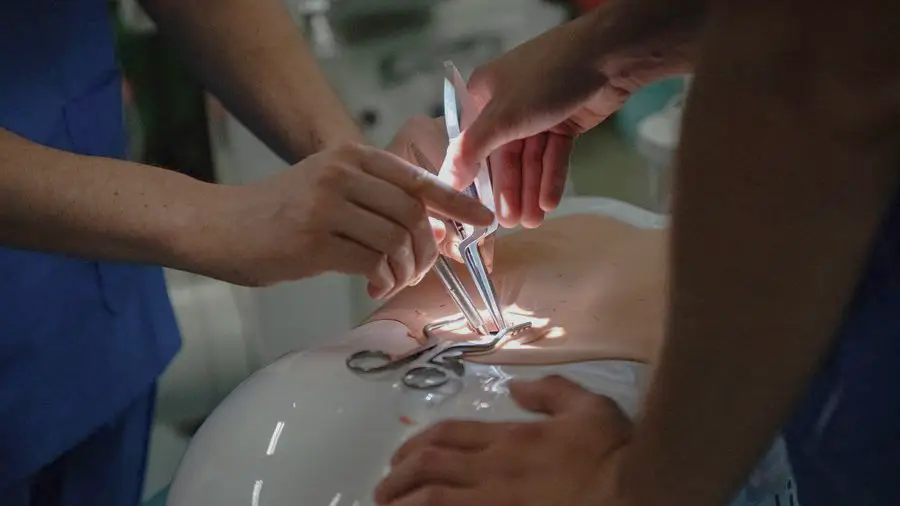
Precision Spine Surgery with Faster Recovery and Reduced Risk
Minimally Invasive Spine Surgery (MISS) is a modern surgical technique that allows spine surgeons to treat spinal conditions with smaller incisions, less disruption to surrounding muscles and tissues, and faster recovery times compared to traditional open surgery.
At Starcare International Hospital, our spine team specializes in MISS procedures, combining advanced imaging, surgical technology, and globally trained expertise to provide effective relief from spinal disorders while minimizing pain, hospital stay, and complications.
What is Minimally Invasive Spine Surgery?
In traditional open spine surgery, large incisions and muscle retraction are often required, leading to greater blood loss, longer recovery times, and a higher risk of complications.
MISS uses specialized instruments, tubular retractors, and high-definition imaging to access the spine through small incisions—typically less than 2–3 cm. This technique reduces trauma to muscles, nerves, and ligaments, allowing for faster healing and better functional outcomes.
Conditions Treated with MISS
Minimally Invasive Spine Surgery is suitable for a wide range of spinal disorders, including:
-
Herniated or bulging discs
-
Lumbar and cervical spinal stenosis
-
Degenerative disc disease
-
Spondylolisthesis (slipped vertebra)
-
Sciatica and nerve compression
-
Spinal instability
-
Vertebral fractures (due to trauma or osteoporosis)
-
Recurrent disc herniation
-
Spinal infections or tumors (in selected cases)
MISS is ideal for patients who require surgical intervention but want to avoid the downtime and risks associated with open procedures.
Types of MISS Procedures Offered at Starcare
Our spine surgeons perform the following minimally invasive spine surgeries:
-
Microdiscectomy
Removal of herniated disc material pressing on spinal nerves through a tiny incision using a microscope or endoscope. -
Minimally Invasive Spinal Fusion
Fuses two or more vertebrae together to stabilize the spine using small incisions and guided instrumentation. -
MISS Laminectomy or Laminotomy
Removal of a small portion of the vertebral bone or ligament to relieve spinal stenosis. -
Percutaneous Pedicle Screw Fixation
Stabilization of the spine using screws and rods inserted through small skin incisions. -
Vertebroplasty & Kyphoplasty
Minimally invasive cement injection procedures to stabilize spinal fractures. -
MISS for Spondylolisthesis
Decompression and stabilization of the spine in patients with vertebral slippage.
Benefits of MISS
-
Smaller incisions and minimal muscle disruption
-
Less blood loss during surgery
-
Reduced post-operative pain and use of pain medications
-
Shorter hospital stay—many procedures are done as day-care or single-day admissions
-
Faster recovery and earlier return to work and daily activities
-
Lower risk of surgical complications and infections
-
Reduced scarring and better cosmetic outcomes
-
Safe for older patients or those with high surgical risk
MISS combines the safety and effectiveness of conventional surgery with the advantages of modern, patient-friendly techniques.
What to Expect
Pre-Surgery
You will undergo a full clinical evaluation, MRI or CT scan, and pre-operative counseling to assess suitability for MISS.
During Surgery
Performed under general or regional anesthesia, MISS procedures use real-time imaging (fluoroscopy or navigation systems) for precise guidance. The surgeon operates through a tubular retractor without cutting large muscles or tissues.
Post-Surgery
Most patients begin walking within hours after surgery. Depending on the procedure, discharge may happen the same day or within 24–48 hours. Physiotherapy and guided rehabilitation begin early to enhance outcomes.
Is MISS Right for You?
MISS is suitable for many patients with moderate to severe spine conditions that haven’t improved with conservative treatments such as physiotherapy, medications, or injections. It is also a great option for patients looking to avoid the complications and downtime associated with traditional open surgery.
Your spine surgeon will assess your medical history, imaging, and goals to determine whether MISS is appropriate for your condition.
Why Choose Starcare for MISS?
-
Globally trained spine surgeons with expertise in minimally invasive techniques
-
Advanced surgical infrastructure and intraoperative navigation systems
-
Emphasis on safety, precision, and patient outcomes
-
Personalized rehabilitation and recovery plans
-
Lower complication rates and high patient satisfaction
-
Supportive care for elderly and high-risk patients
At Starcare, we combine innovation, technology, and personalized care to help you return to a pain-free, active life with minimal disruption.