
Preserve Motion and Relieve Pain with Advanced Spine Solutions
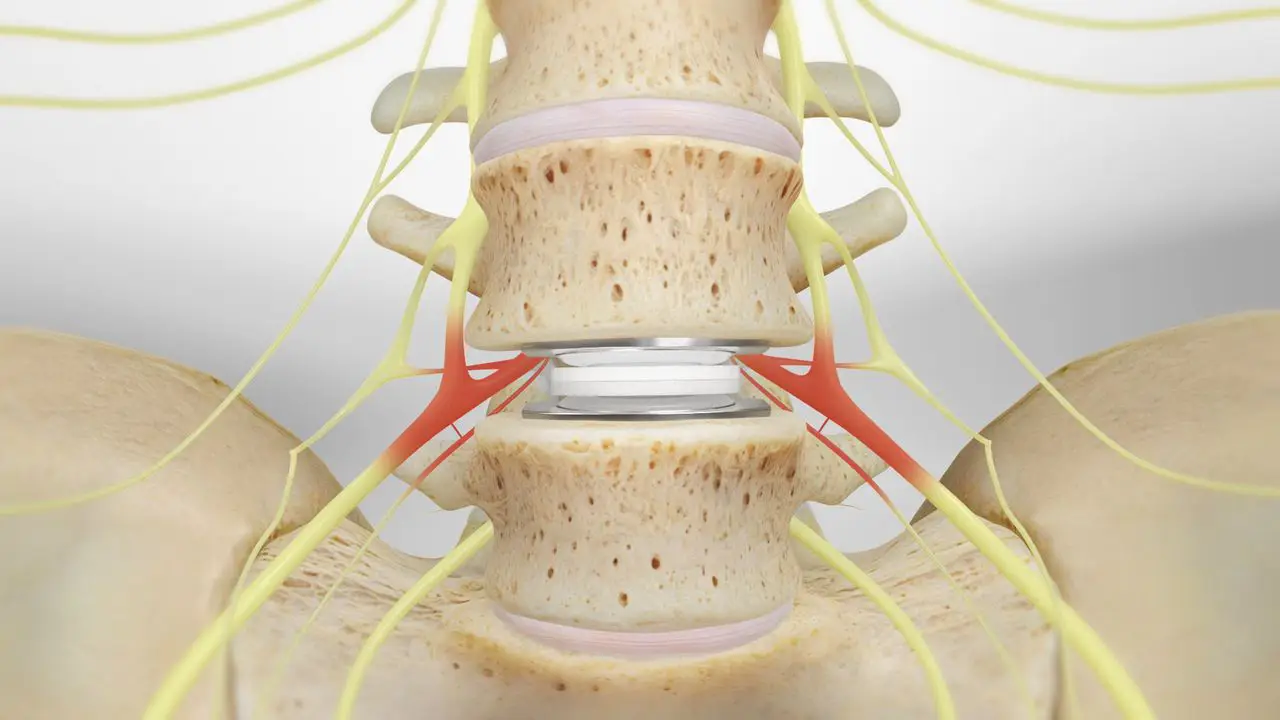
Disc Replacement Surgery, also known as Artificial Disc Replacement (ADR) or Total Disc Arthroplasty, is a modern alternative to spinal fusion for patients with degenerative disc disease. It is designed to relieve chronic neck or back pain by replacing a damaged intervertebral disc with an artificial implant that maintains natural motion and flexibility of the spine.
At Starcare International Hospital, we offer disc replacement surgery using state-of-the-art implants and minimally invasive surgical techniques. Our spine specialists evaluate each case carefully to determine whether this motion-preserving solution is right for you.
What is Disc Replacement?
The human spine is made up of vertebrae separated by intervertebral discs that act as cushions and allow movement. When a disc becomes damaged due to wear and tear, injury, or disease, it can cause persistent pain, stiffness, and nerve compression.
In disc replacement surgery, the damaged disc is removed and replaced with a specially designed prosthetic disc made of metal or a combination of metal and medical-grade plastic. Unlike spinal fusion, which eliminates movement at the affected level, disc replacement preserves mobility, reduces stress on adjacent segments, and helps maintain more natural spinal function.
Conditions Treated with Disc Replacement
Disc replacement surgery is most commonly performed for:
-
Degenerative disc disease
-
Chronic discogenic back or neck pain
-
Herniated discs with minimal facet joint disease
-
Disc collapse resulting in segmental instability
-
Pain not responding to conservative treatment (medication, physiotherapy, injections)
It is typically offered when symptoms are localized to one or two spinal levels and when imaging confirms disc pathology as the source of pain.
Types of Disc Replacement Procedures
At Starcare, we offer disc replacement at both cervical (neck) and lumbar (lower back) levels:
Cervical Disc Replacement
-
Ideal for patients with single-level disc degeneration in the neck
-
Relieves neck pain, arm numbness, and tingling caused by nerve root compression
-
Preserves head and neck range of motion
Lumbar Disc Replacement
-
Suitable for patients with lower back pain due to disc degeneration at one spinal level
-
Offers an alternative to lumbar spinal fusion in carefully selected patients
-
Maintains spinal motion and reduces adjacent segment stress
Advantages of Disc Replacement Over Spinal Fusion
-
Preserves natural motion and flexibility
-
Reduces risk of adjacent segment degeneration
-
Faster return to daily activities and work
-
No need for bone grafting
-
Lower risk of implant-related complications
-
Minimized stress on nearby spinal levels
Disc replacement is a preferred option for younger, active individuals who wish to avoid the long-term effects of spinal fusion and retain full spinal function.
The Procedure and Recovery
Surgical Procedure
-
Performed under general anesthesia
-
A small incision is made in the front of the neck (for cervical) or abdomen (for lumbar)
-
The damaged disc is removed
-
The artificial disc is carefully implanted and positioned using intraoperative imaging
-
Muscles and tissues are gently retracted, not cut
Recovery
-
Hospital stay is typically 1–2 days
-
Most patients resume light activities within a week
-
Return to work within 2–4 weeks, depending on the job and procedure
-
Physiotherapy may be recommended to improve strength and flexibility
Recovery is generally faster and less painful than traditional spinal fusion, with fewer restrictions on movement.
Who is a Candidate for Disc Replacement?
You may be a suitable candidate if:
-
You have chronic neck or back pain that hasn’t improved with non-surgical treatment
-
Your pain is due to disc degeneration confirmed by MRI or CT scan
-
You have no significant facet joint arthritis or spinal instability
-
You are generally healthy and under the age of 60 (in most cases)
-
You are motivated to maintain an active lifestyle
Your spine surgeon will conduct a thorough evaluation to determine the best surgical approach for your condition.
Why Choose Starcare for Disc Replacement Surgery?
-
Expertise in advanced, motion-preserving spine surgeries
-
Minimally invasive and muscle-sparing techniques
-
State-of-the-art implants and imaging systems
-
Individualized treatment and rehabilitation plans
-
High success rates and excellent long-term outcomes
-
Comprehensive pre-operative assessment and post-operative care
At Starcare, we are committed to helping patients regain freedom of movement, reduce pain, and return to active, fulfilling lives.